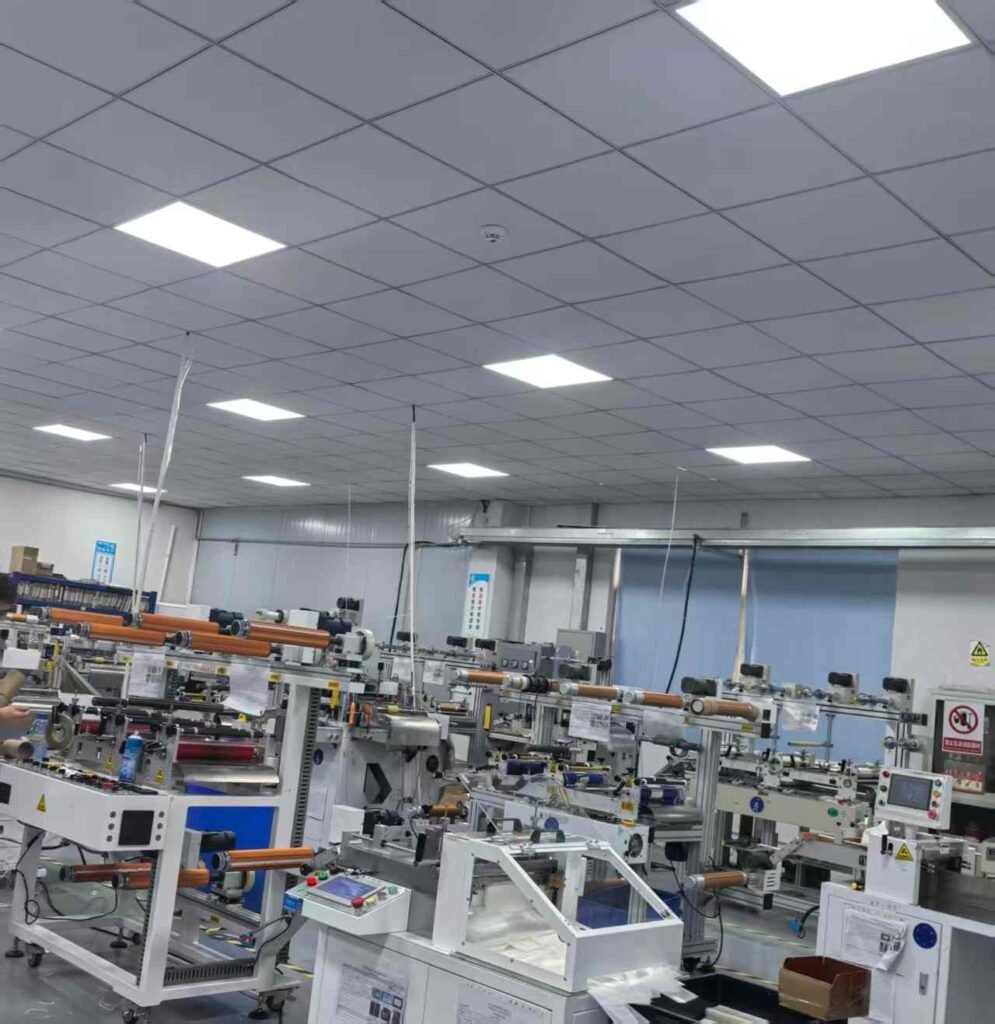

Bronze/Carbon-Filled PTFE Rings
Bronze/Carbon-Filled PTFE Rings: Engineered for Extreme Low Friction and High Temperatures
We manufacture advanced modified PTFE guide rings and wear bands designed to provide unparalleled low-friction performance in demanding fluid power environments.
Whether your application involves high-speed rotary motion, extreme temperature fluctuations, or non-lubricated conditions, choosing a filled PTFE profile is essential for eliminating stick-slip and ensuring precise, continuous dynamic sealing.
Below is an overview of our core Bronze and Carbon-filled PTFE profiles, engineered with specialized material formulations to deliver superior thermal conductivity and wear resistance across critical industrial systems.
Classification by Filler Material
The choice of filler fundamentally alters the mechanical, thermal, and chemical properties of the PTFE base.
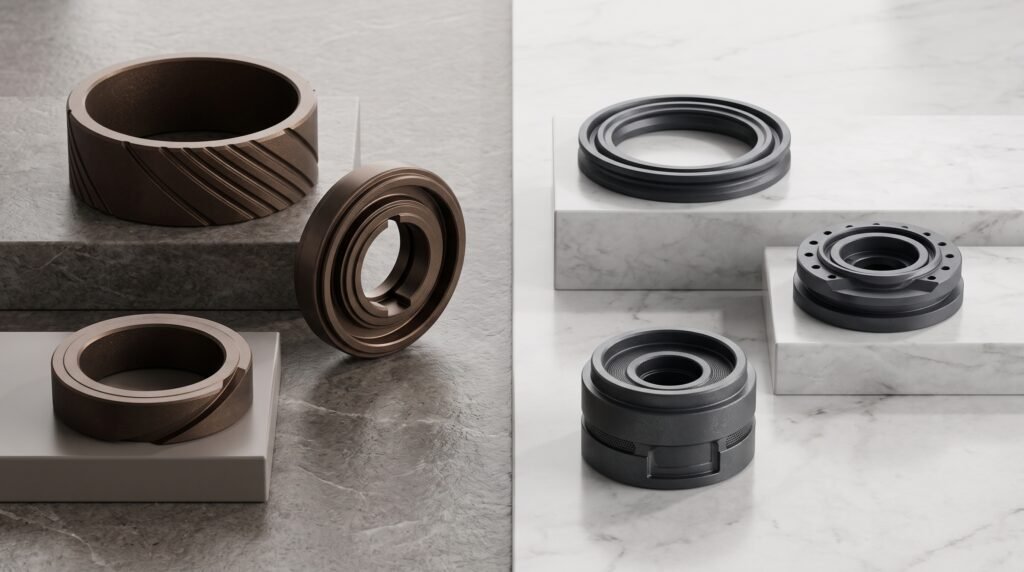
Bronze-Filled PTFE (Typically 40% to 60% Bronze)
Core Characteristics: Exceptional compressive strength, superior wear resistance, and excellent thermal conductivity. The bronze filler allows the ring to rapidly dissipate friction-generated heat away from the sealing surface.
Limitations: Bronze is susceptible to oxidation and chemical attack. It is incompatible with corrosive fluids or strong acids.
Primary Applications: Standard to heavy-duty hydraulic cylinders, mobile hydraulics, and high-speed rotary equipment. It is highly recommended for systems running on hardened steel mating surfaces.
Carbon-Filled PTFE (Typically 15% to 25% Carbon, often with Graphite)
Core Characteristics: Outstanding chemical inertness, excellent wear resistance, and exceptional self-lubricating properties. It resists deformation under load far better than virgin PTFE and is lighter than bronze.
Limitations: Lower thermal conductivity compared to bronze-filled variants, and slightly lower peak compressive strength.
Primary Applications: Pneumatic cylinders, water-hydraulics, steam applications, and automotive shock absorbers. It is the definitive choice for environments with marginal/dry lubrication or highly corrosive chemical processing.
Classification by Functional Application
Depending on the specific profile and system requirement, these rings serve distinct functional roles.
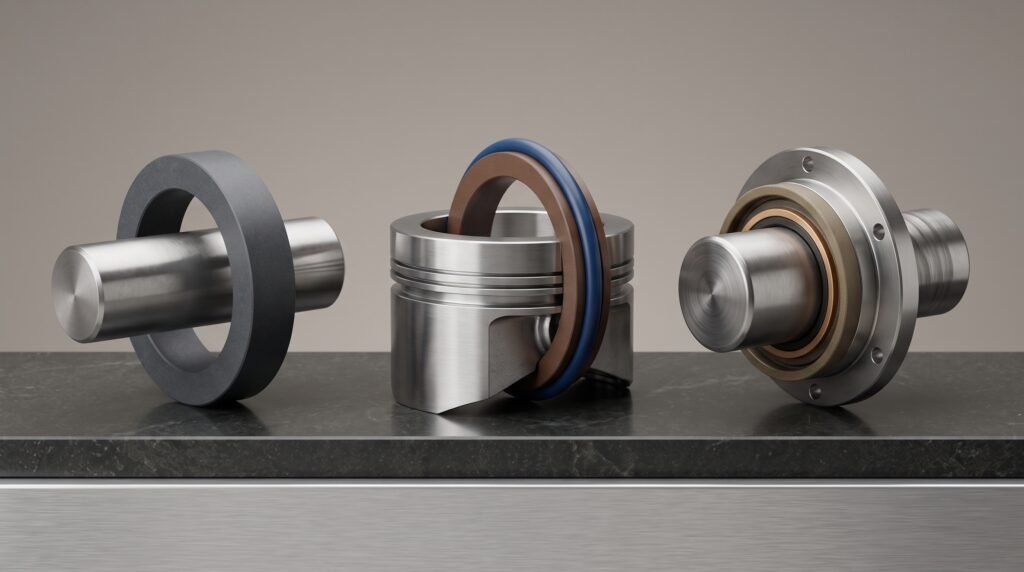
Wear Rings / Guide Bands: Rectangular profiles used strictly for mechanical guidance. They absorb transverse loads and prevent metal-to-metal scoring between the piston and cylinder bore or the rod and gland.
Energized Glide Rings (Dynamic Seals): Often manufactured as a two-piece seal (e.g., Glyd Rings or Stepseals), consisting of the filled PTFE ring and an elastomeric O-ring (energizer). The PTFE ring acts as the low-friction dynamic sealing face, preventing stick-slip while handling high system pressures.
Rotary Shaft Seals: Specialized profiles designed to handle continuous rotary motion, utilizing the high heat dissipation of bronze or the inherent lubricity of carbon to survive constant dynamic friction.
Classification by Cut Configuration
If the ring is rigid and must be installed into a closed groove, it is manufactured with a specific split.
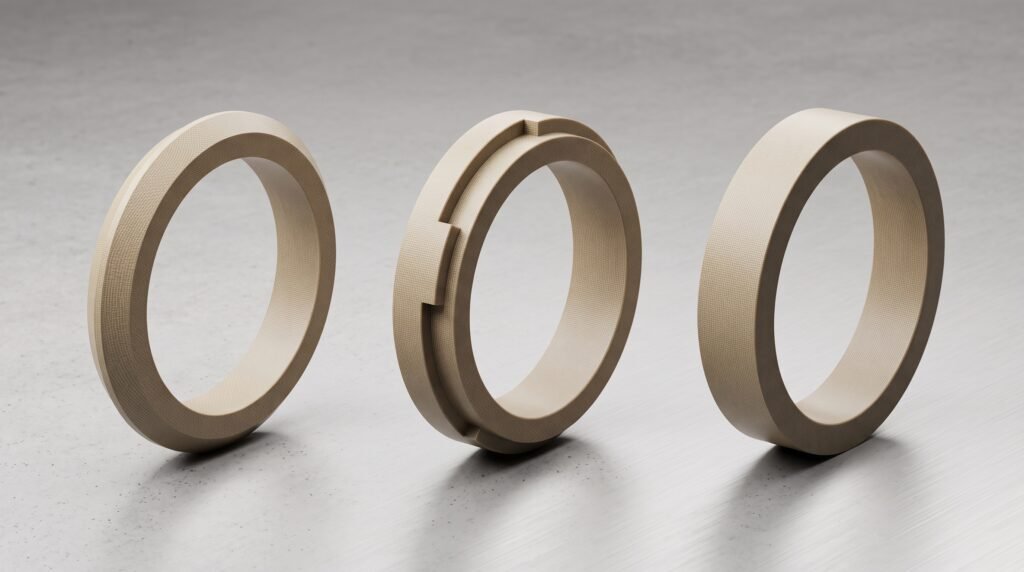
Angle Cut (Scarf Cut): The standard cut (typically 30° or 45°) for wear rings. It allows the ring to easily snap into closed grooves and accommodates thermal expansion while maintaining a continuous bearing surface.
Step Cut: Designed with overlapping steps to strictly restrict the fluid flow path. Used when minimizing fluid bypass across the guide ring is necessary to protect downstream components.
Uncut (Solid Rings): Used strictly for dynamic sealing (glide rings). These are physically stretched over the piston during installation and then mechanically compressed (resized) back into the groove to form a seamless, zero-leakage dynamic seal.
| Classification Matrix | Specific Variant | Rigorous Technical Specifications | Primary Application & Advantage |
|---|---|---|---|
| By Filler Material formulation | Bronze-Filled PTFE (40% - 60%) |
Hardness: 60-65 Shore D Density: ~3.05 - 3.15 g/cm³ Deformation (14 MPa, 24h): 5% - 7% Thermal Conductivity: ~0.60 W/(m·K) | Heavy-duty hydraulic cylinders and mobile hydraulics. Superior thermal dissipation and extrusion resistance. Requires hardened steel mating surfaces and non-corrosive fluids. |
| Carbon/Graphite-Filled PTFE (15% - 25%) |
Hardness: 65-70 Shore D Density: ~2.00 - 2.10 g/cm³ Deformation (14 MPa, 24h): 4% - 6% Chemical Resistance: pH 0-14 (Inert) | Pneumatic systems, steam applications, and corrosive chemical processing. Exceptional self-lubricating properties make it the definitive choice for dry/marginal lubrication environments. | |
| By Functional Application | Wear Rings / Guide Bands |
Profile: Rectangular Max Bearing Pressure: ~15 N/mm² Max Linear Speed: Up to 5.0 m/s | Mechanical load absorption. Prevents transverse metal-to-metal contact between piston/bore and rod/gland under side-loading conditions. |
| Energized Glide Rings (Dynamic Seals) |
Assembly: PTFE Ring + O-Ring Max System Pressure: Up to 400 Bar Max Linear Speed: Up to 15.0 m/s | High-pressure dynamic sealing. The O-ring acts as an energizer while the filled PTFE face eliminates stick-slip during highly pressurized stroke movements. | |
| Rotary Shaft Seals |
Motion Type: Continuous Rotation Max Surface Speed: Up to 30.0 m/s Max Pressure: ~10 Bar (Unsupported) | Motors, pumps, and gearboxes. Utilizes the high thermal conductivity of bronze or self-lubricity of carbon to survive constant high-speed frictional heat. | |
| By Cut Configuration | Angle Cut (Scarf Cut) |
Standard Angles: 30° / 45° Thermal Expansion Gap: 0.5 - 2.0mm Installation: Closed Grooves | The universal standard for wear bands. The angled gap accommodates operating temperature fluctuations while maintaining continuous linear bearing support. |
| Step Cut |
Geometry: Overlapping Z-Cut Fluid Bypass: Strictly Minimized Pressure Differential: Moderate | Utilized when restricting fluid migration across the guide ring is critical to protecting sensitive downstream internal components. | |
| Uncut (Solid Rings) |
Geometry: Endless Ring Elastic Stretch Limit: ~10% - 15% Post-Install Req: Mechanical Resizing | Strictly utilized for dynamic sealing (Glide Rings). Requires specialized tools to stretch over the piston and compress back into the groove for zero-leakage performance. |
Heavy Construction & Mining
Standard PU wipers and scrapers act as high-pressure hydraulic seals engineered to withstand extreme shock loads, pressure spikes, and abrasive environments in heavy-duty earthmoving equipment.
Industrial Automation
These scrapers serve as precision pneumatic sealing solutions designed for low-friction and high-speed repetitive operations in modern manufacturing assembly lines.
Agricultural Machinery
They provide robust fluid power profiles built to resist UV, harsh weathering, and constant exposure to abrasive particles in open-field environments.
Fluid & Pressure Control
Standard PU wipers work alongside custom molded seals and heavy-duty O-rings formulated for reliable dynamic fluid control and leak prevention in critical valve systems.
Need a Custom Bronze/Carbon-Filled PTFE Rings Solution?
Whether you need standard profiles or non-standard dimensions for your specialized filled PTFE elements, our dedicated senior designer at Bingoo ensures rapid drawing output and precise prototyping. We provide seamless support from initial concept to full-scale production.
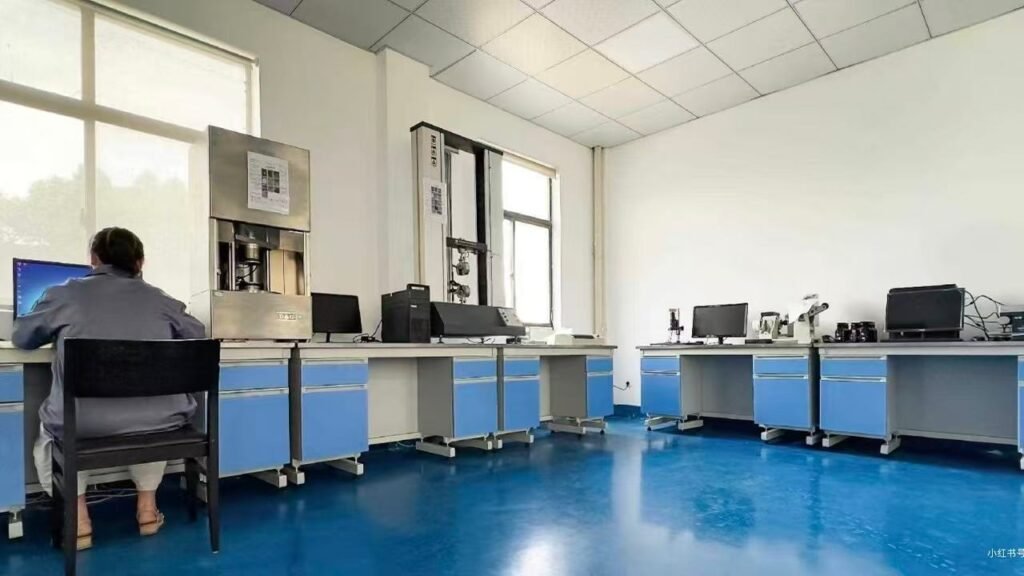
 Direct Expert Review Skip the bureaucratic red tape. You will work directly with our dedicated senior designer to review your CAD drawings or reverse-engineer your physical samples, ensuring rapid and accurate technical communication.
- Material Optimization We don’t just copy dimensions; we optimize for performance. We help you select the exact elastomer or polymer (such as specialized FKM, NBR, or PTFE) to withstand your specific chemical fluids and thermal environments.
- Rapid CNC Prototyping Keep your downtime to an absolute minimum. Utilizing advanced CNC turning technology, we can manufacture high-precision custom prototypes quickly, without the need for expensive upfront mold tooling fees.
 Direct Expert Review Skip the bureaucratic red tape. You will work directly with our dedicated senior designer to review your CAD drawings or reverse-engineer your physical samples, ensuring rapid and accurate technical communication.
 Material Optimization We don’t just copy dimensions; we optimize for performance. We help you select the exact elastomer or polymer (such as specialized FKM, NBR, or PTFE) to withstand your specific chemical fluids and thermal environments.
 Rapid CNC Prototyping Keep your downtime to an absolute minimum. Utilizing advanced CNC turning technology, we can manufacture high-precision custom prototypes quickly, without the need for expensive upfront mold tooling fees.