

Rotary Shaft Seals &Oil Seals
Engineered for Demanding Environments
“Engineered for the most demanding dynamic sealing environments. Through precise radial load control and advanced hydrodynamic lip designs, our rotary shaft seals effectively retain lubrication and exclude external micro-contaminants under high-speed rotation, extreme temperatures, and high-pressure conditions. We provide a full matrix of sealing solutions—from standard elastomers to high-performance PTFE—to ensure the continuous, reliable operation of your core mechanical equipment.”
Rotary Shaft & Oil Seals: The First Line of Defense
🛡️ Absolute Contaminant Exclusion Create an impenetrable barrier against dirt, moisture, and abrasive particles. By blocking these external threats, we directly protect your expensive bearings from premature wear and catastrophic failure
💧 Optimized Lubrication Control Secure essential oils and greases precisely where they belong. Our advanced lip designs minimize frictional drag and heat generation, ensuring high-speed moving parts operate smoothly and efficiently.
⚙️ Unwavering System Integrity Whether handling dynamic rotary motion or static housing connections, our seals maintain stable internal pressure and fluid levels, adapting flawlessly to your specific operational speeds and thermal conditions.
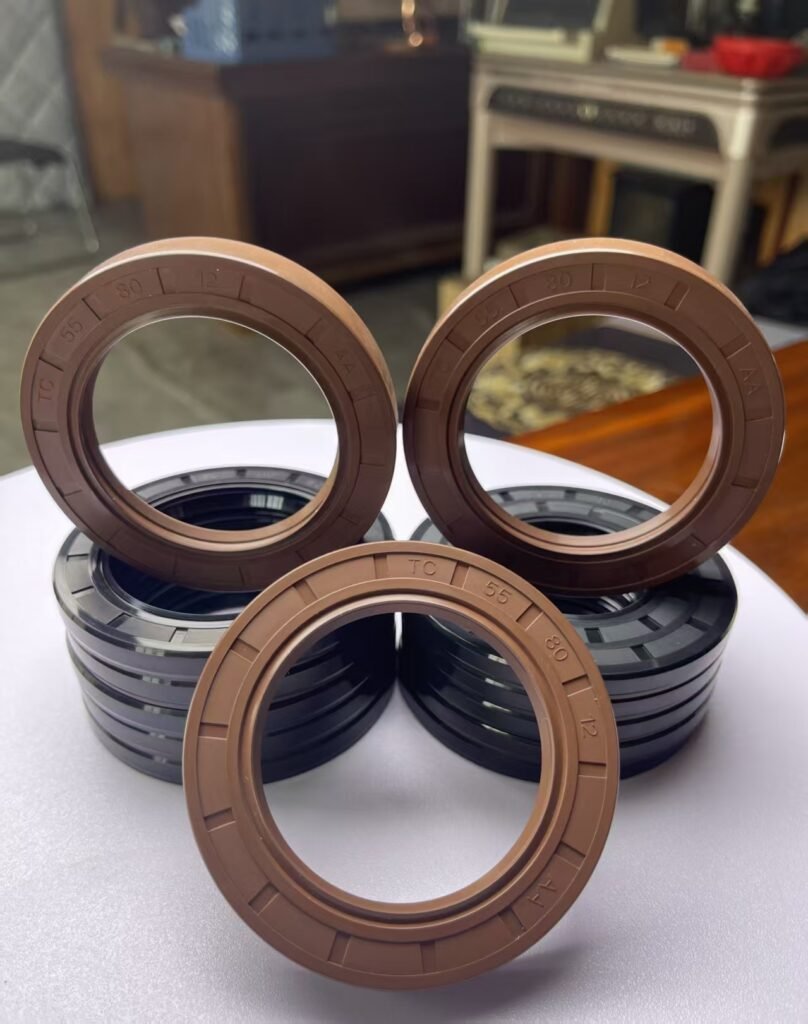
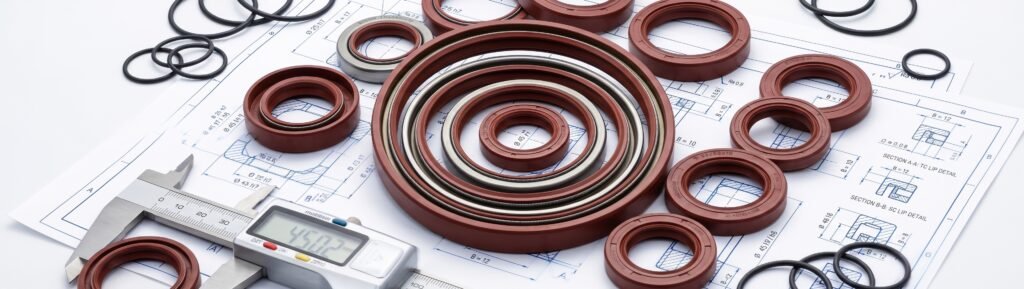
Standard Radial Shaft Seals (TC / SC / TG Types)
Technical Overview: The most widely used foundational oil seals in industrial applications, engineered for maximum reliability. Features a vulcanized elastomer bonded to a carbon steel or stainless steel casing, equipped with a spring-loaded primary lip that provides consistent radial clamping force. The double-lip design (e.g., TC type) includes an auxiliary dust lip to effectively prevent the ingress of dust and moisture.
Core Specifications:
Available Materials: NBR (Nitrile), FKM (Viton), VMQ (Silicone).
Peripheral Speed: Up to 35 m/s (depending on shaft diameter and material).
Temperature Range: -40°C to +220°C.
Typical Applications: Electric motors, gearboxes, industrial pumps, and general transmission systems.
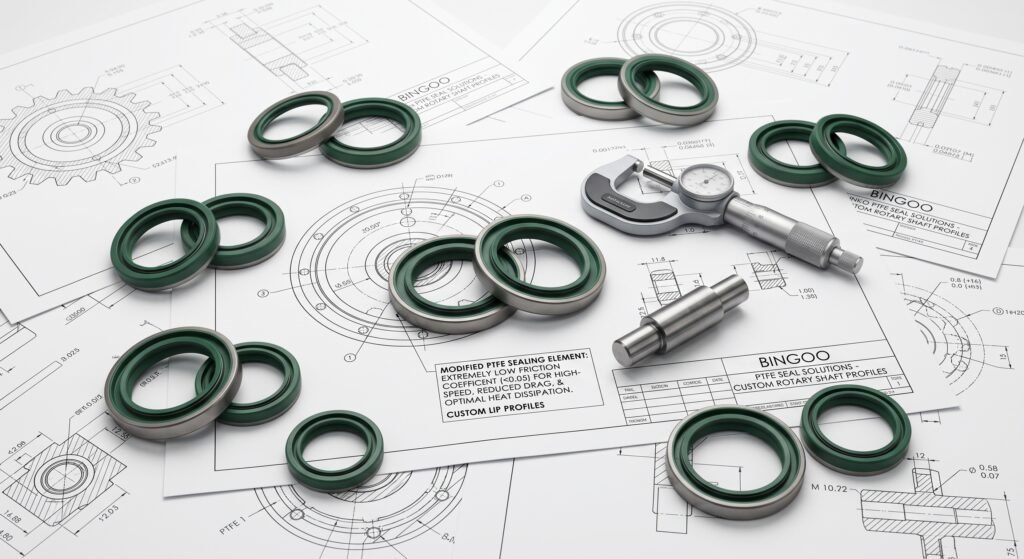
PTFE Rotary Shaft Seals
Technical Overview: Positioned for high-end applications, these seals excel in extreme conditions where traditional rubber seals fail. Eliminating the traditional spring structure, they utilize a modified PTFE lip with shape-memory characteristics. They feature an exceptionally low friction coefficient, allow for short periods of “dry running,” and withstand almost all strong acids, alkalis, and aggressive chemical media.
Core Specifications:
Pressure Resistance: Excellent resistance to high-pressure extrusion, withstanding up to 1.0 MPa.
Maximum Speed: Supports ultra-high peripheral speeds up to 40 m/s.
Extreme Temperature Limit: -60°C to +250°C.
Typical Applications: Screw air compressors, racing engine crankshafts, and chemical reactor agitator shafts.
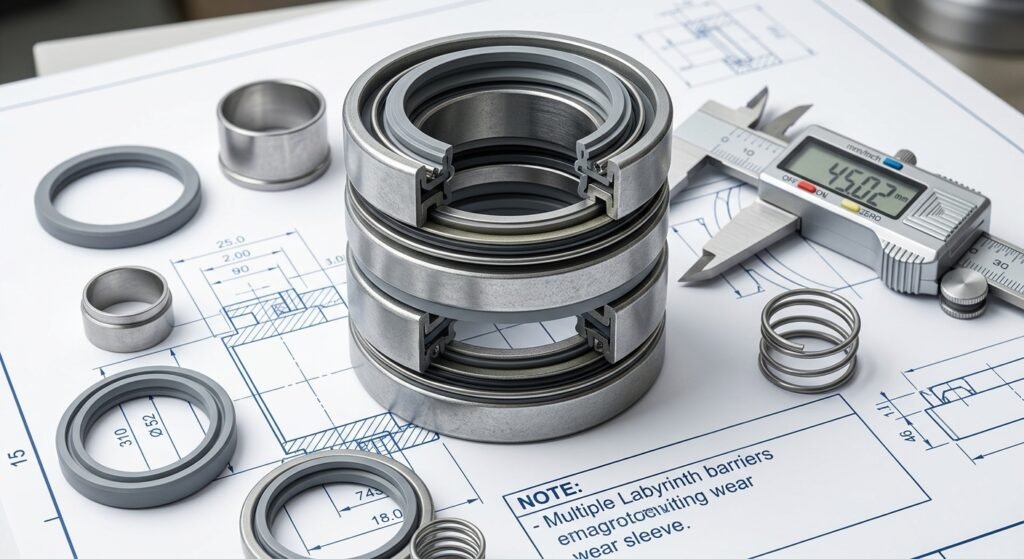
Heavy-Duty Cassette Seals
Technical Overview: Designed for large-scale machinery and severely harsh, muddy environments. These feature a fully enclosed, pre-assembled structure with an integrated wear sleeve. This design not only provides multiple labyrinth sealing barriers but also eliminates the costly requirement for customers to harden their equipment shafts, as the sealing lip runs exclusively on the internal metal sleeve.
Core Specifications:
Contamination Resistance: Extremely high (specifically engineered for mud, sand, and heavy dust environments).
Service Life: Extends operational lifespan by 3 to 5 times compared to traditional single-piece oil seals.
Typical Applications: Agricultural machinery (tractor axles), construction equipment (excavator wheel hubs), and heavy-duty commercial trucks.
High-Pressure Oil Seals (TCV / TCN Types)
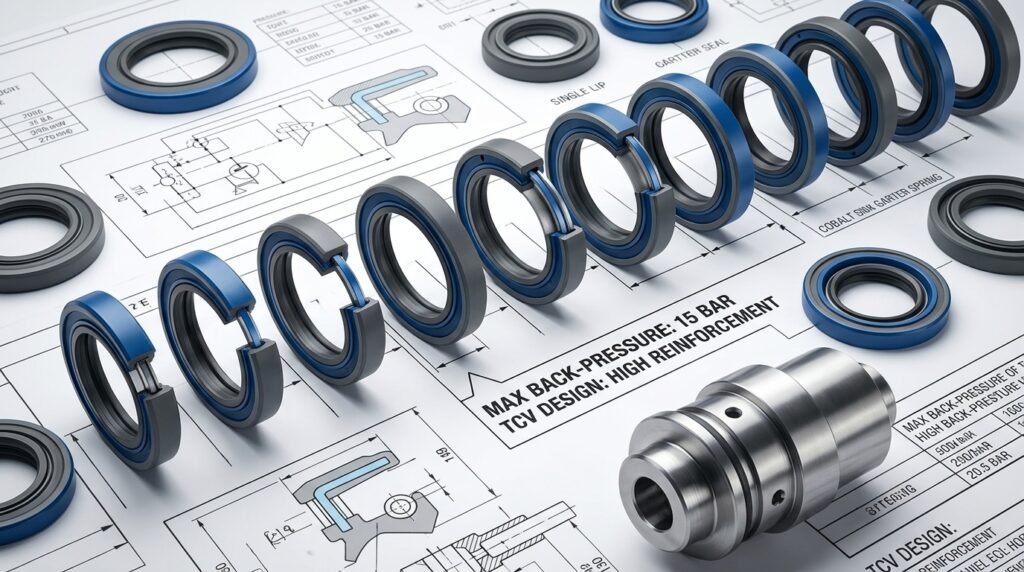
Technical Overview: Showcasing precision manufacturing, these seals are specifically engineered to resist deformation. When high back-pressure exists within the cavity, standard seal lips can invert. High-pressure oil seals feature a shorter, stiffer flex section and are typically reinforced with a metal backup ring, preventing lip deformation and rupture under pressure.
Core Specifications:
Maximum Pressure Capacity: TCV type can handle up to 0.3 MPa, and TCN type up to 1.0 MPa (compared to traditional seals which max out at roughly 0.03 MPa).
Typical Applications: Hydraulic pumps, hydraulic motors, and high-pressure fluid power systems.
V-Rings & Axial Shaft Seals
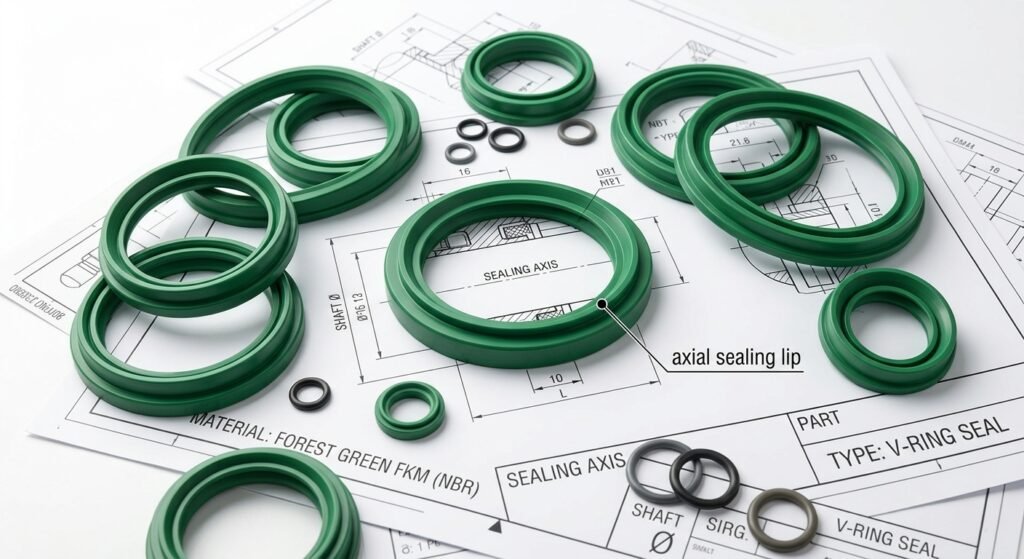
Technical Overview: Unlike radial seals, the V-Ring is an all-rubber auxiliary seal that mounts directly on the shaft and rotates with it. Its flexible, tapered sealing lip presses against a stationary counterface (housing). It utilizes centrifugal force to effectively sling off dirt, water, and contaminants, providing superior end-face protection.
Core Features: Requires no metal casing, making installation extremely simple; highly forgiving of shaft eccentricity and surface roughness.
Typical Applications: Rolling mills, paper-making machinery, and water pump bearing protection.
Material Comparison
| Material Grade | Working Temp | Oil Resistance | Wear Resistance | Heat Resistance | Cost Index |
|---|---|---|---|---|---|
NBR (Nitrile) Standard Elastomer | -40°C ~ +120°C | ★★★★☆Good | ★★★★★Excellent | ★★★☆☆Moderate | $ Economical |
FKM (Viton™) Fluoroelastomer | -20°C ~ +200°C | ★★★★★Outstanding | ★★★★☆Very Good | ★★★★★Excellent | $$$ High |
PTFE (Teflon™) Fluoropolymer | -60°C ~ +250°C | ★★★★★+Ultimate | ★★★☆☆Good (w/ Fillers) | ★★★★★+Ultimate | $$$$ Premium |
VMQ (Silicone) Polysiloxane | -60°C ~ +220°C | ★★☆☆☆Fair | ★★☆☆☆Poor | ★★★★★Excellent | $$ Moderate |
HNBR Hydrogenated Nitrile | -30°C ~ +150°C | ★★★★☆Very Good | ★★★★★+Ultimate | ★★★★☆Very Good | $$$$ Premium |
Need a Custom Solution for Your Specific Operating Conditions?
A standard material matrix cannot account for every complex variable in real-world applications—such as specific chemical concentrations, extreme linear speeds, or pressure pulsations.
Submit your exact operational parameters (temperature, pressure, media, and rotational speed), and our engineering support will provide a tailored material recommendation and a free prototyping plan within 2 hours.
Material Science Fundamentals for Dynamic Sealing
FKM (Fluoroelastomer): High-Temperature & Chemical Resistance
Core Principle: The molecular structure is dominated by highly stable carbon-fluorine bonds.
Technical Logic: This high bond energy provides extreme chemical inertness. While standard elastomers swell and harden when exposed to synthetic oils or corrosive solvents, FKM maintains its high elasticity without thermal degradation, even at extreme temperatures up to 200°C.
HNBR (Hydrogenated Nitrile): Heavy-Duty & High-Abrasion Performance
Core Principle: Produced through catalytic hydrogenation, a process that saturates the vulnerable carbon-carbon double bonds found in the standard NBR polymer backbone.
Technical Logic: Eliminating these double bonds drastically improves the material’s resistance to oxidation, ozone, and harsh chemicals. In applications involving extreme dynamic friction or exposure to sour gas (H₂S), its tensile strength and operational lifespan far exceed those of standard rubber.
VMQ (Silicone): The Thermal Flexibility Paradox
Core Principle: The primary molecular backbone consists of inorganic silicon-oxygen (Si-O) bonds, rather than traditional organic carbon chains.
Technical Logic: This unique backbone grants exceptional low-temperature flexibility, allowing the seal to retain its clamping force without embrittlement down to -60°C. The Engineering Limitation: Silicone has exceptionally low tensile and tear strength. If applied to a high-speed rotating shaft, abrasive friction will rapidly destroy the lip. Therefore, it is strictly reserved for static seals or very low-speed rotary applications.
PTFE (Polytetrafluoroethylene): Springless, Dry-Running Sealing
Core Principle: Defined by its exceptionally low surface energy and minimal friction coefficient.
Technical Logic: This lubricity allows mechanical equipment to operate safely during temporary “dry-running” conditions where oil lubrication is absent. The Engineering Challenge: Because PTFE is a plastomer rather than a true elastomer (it lacks natural elastic rebound), it must abandon traditional spring-loaded designs. Instead, it relies on advanced, shape-memory lip geometry that is engineered to maintain interference and grip the rotating shaft.