
Rubber-to-Metal Bonded Seals
Fluid Power Sealing Solutions: Engineered for Precision and Durability
Below is an overview of this core sealing profile and its specific applications within a cylinder system:
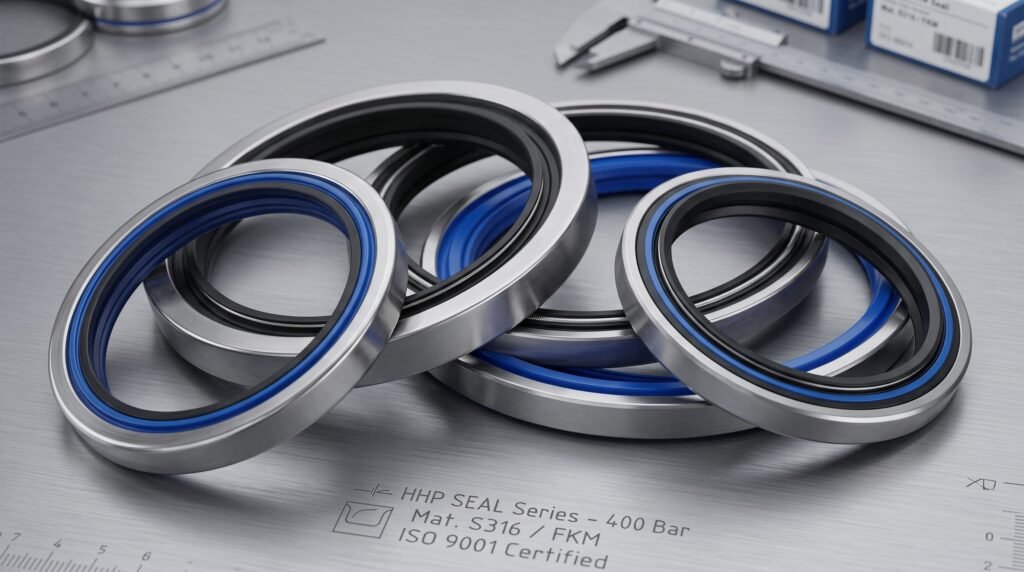
Absolute System Integrity: By seamlessly bonding flexible rubber with a rigid metal skeleton, this seal maintains stability under extreme pressure to uphold the absolute integrity of high-pressure fluid power systems.
Leakage Prevention & Lifespan Extension: With the metal substrate offering exceptional resistance to extrusion and deformation, this sealing structure is critical to preventing leakage and significantly extending the lifespan of precision pneumatic cylinders and associated industrial equipment.
Multi-Scenario Cylinder Applications: As one of our core sealing profiles, it is engineered for specific applications within a cylinder system, making it highly effective for B2B industrial environments subject to heavy vibration or high-pressure impacts.
Structural & Geometric Configuration
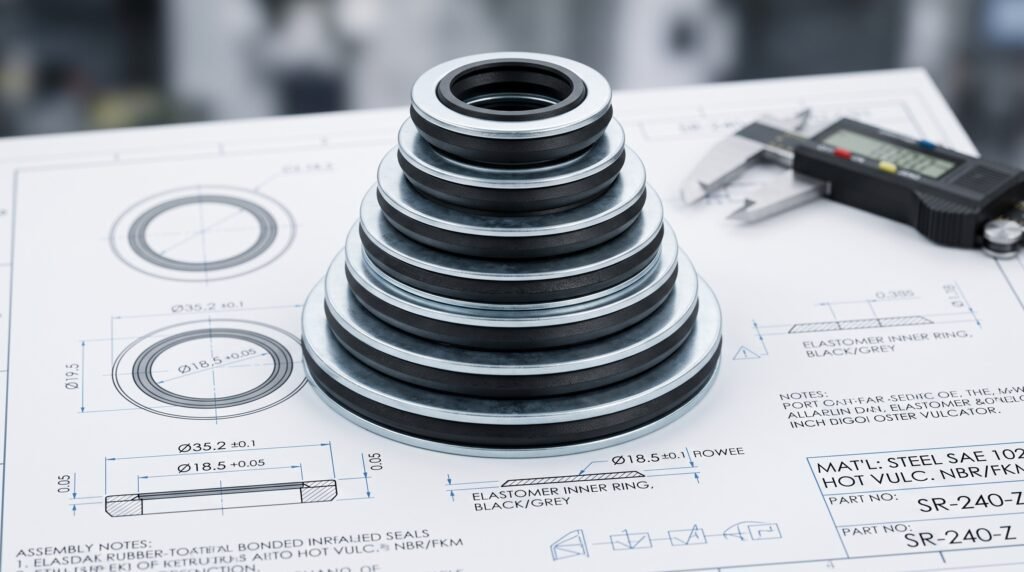
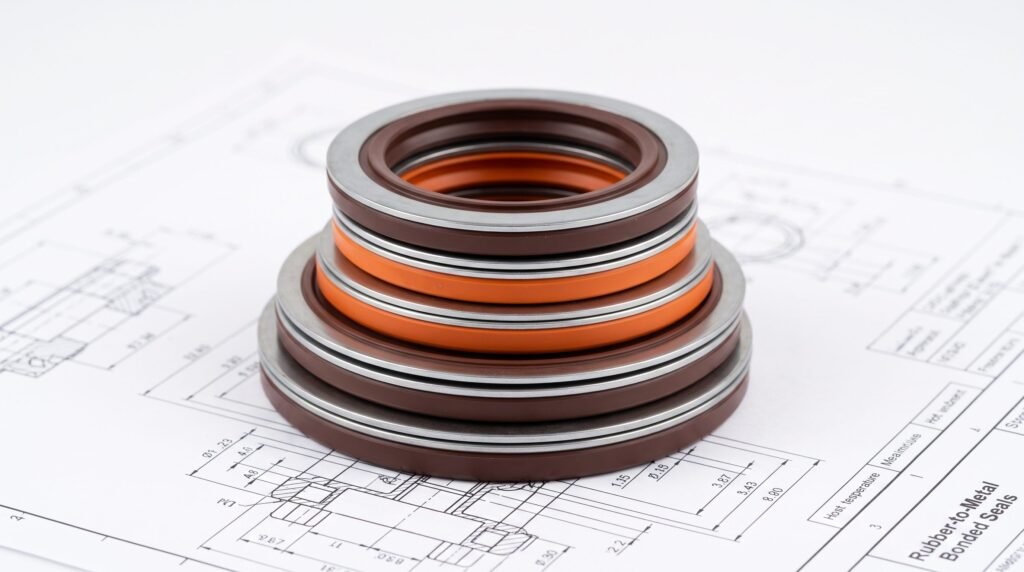
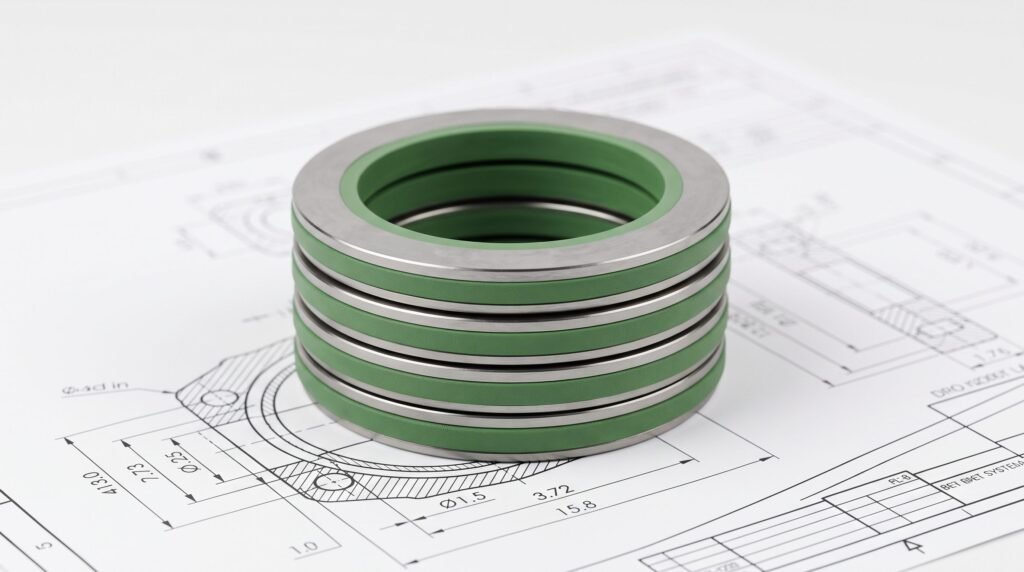
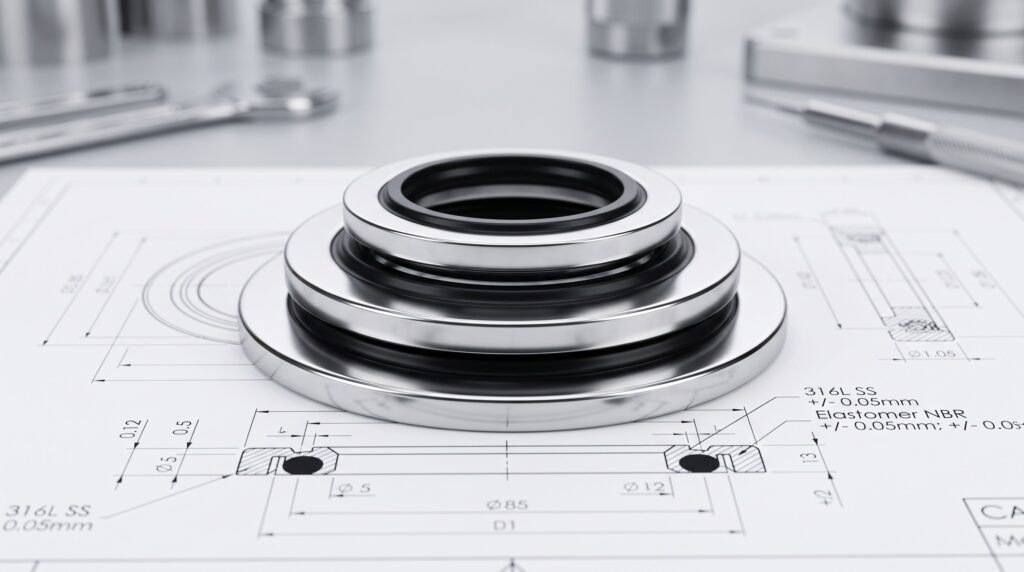
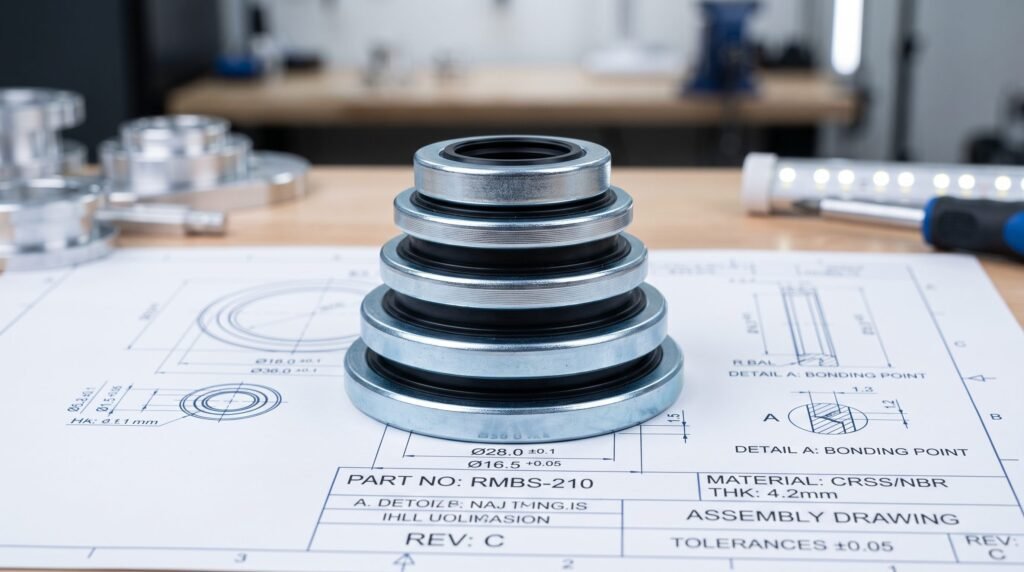
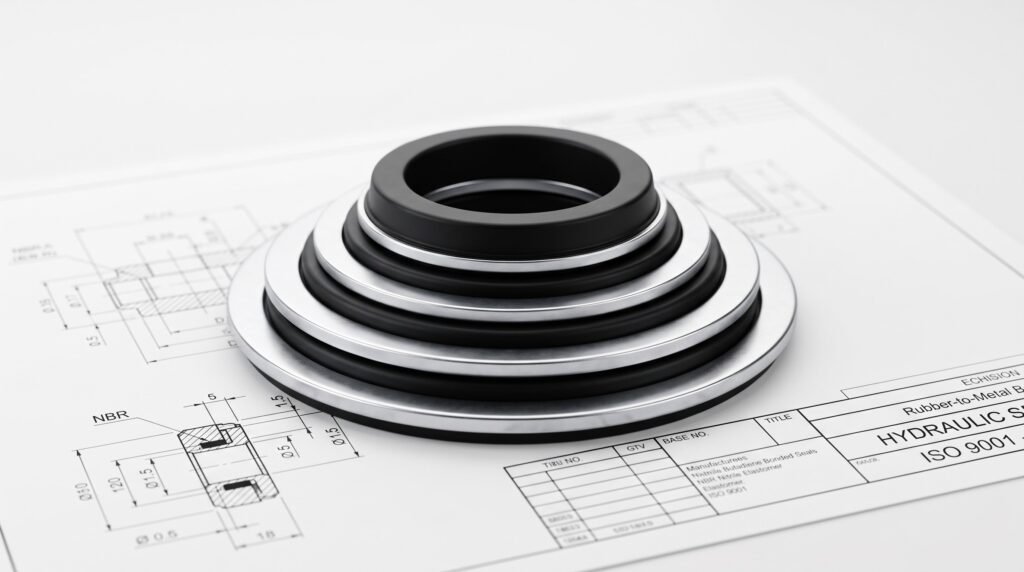
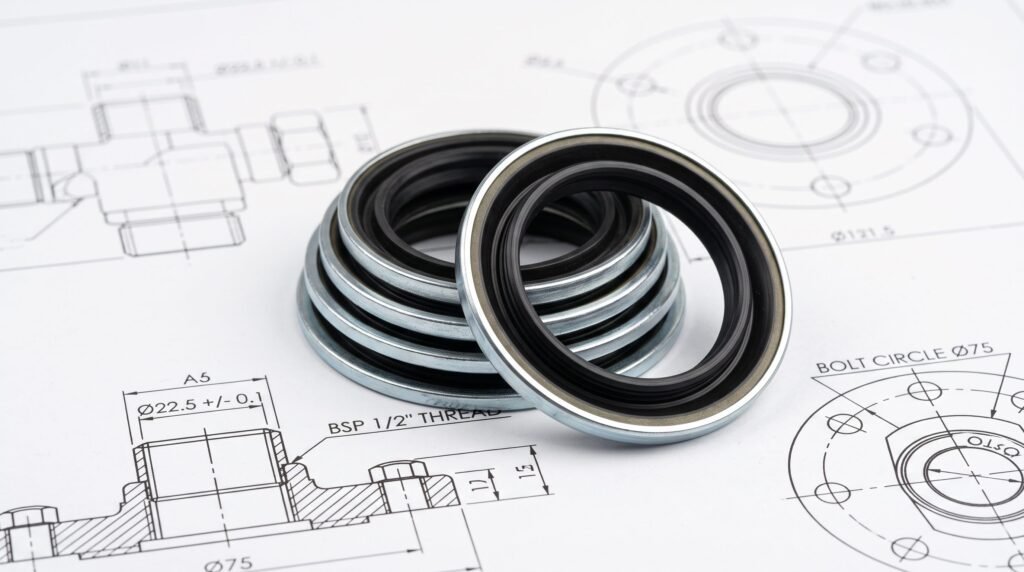
The “Rubber-to-Metal Bonded Seals” function as composite static sealing elements, integrating an elastomer chemically bonded to a rigid metal washer via hot vulcanization.
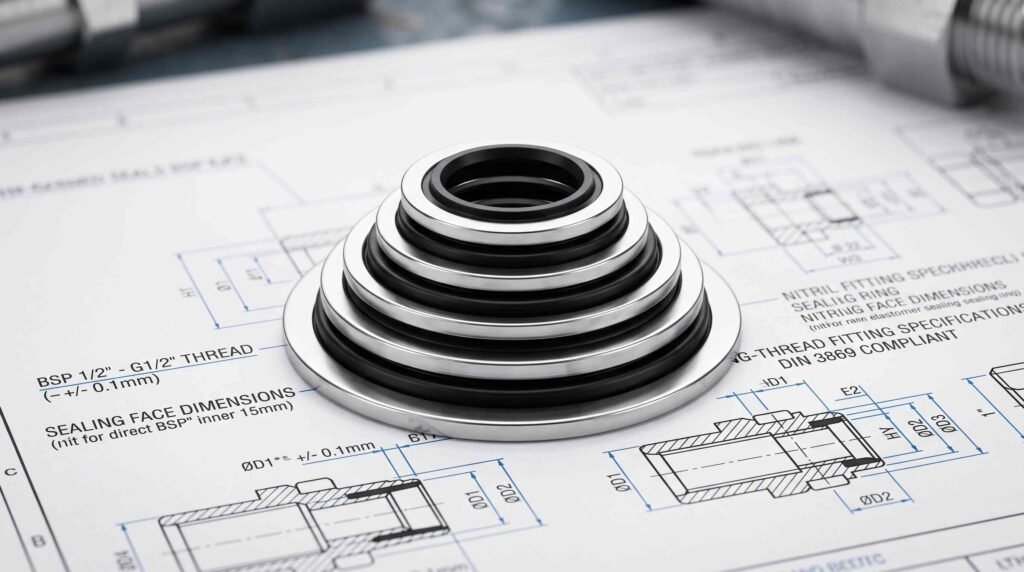
Standard Bonded Seals: Comprise a flat metal outer ring and a trapezoidal or circular rubber inner ring. They rely on axial compressive forces during the tightening of threaded joints to induce controlled elastic deformation, effectively filling microscopic flange clearances.
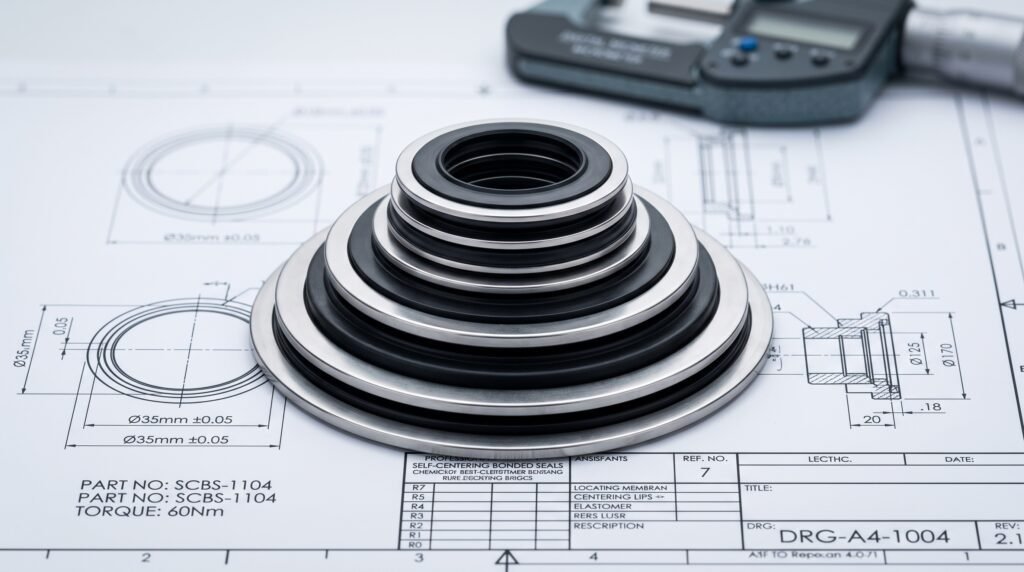
Self-Centering Bonded Seals: Feature a thin membrane or locating lip extending from the inner diameter of the elastomer. This design ensures absolute concentricity when installed in a threaded port, preventing localized seal failure and stress concentration caused by eccentric compression.
Material System Matrix
To accommodate complex fluid power systems, these seals are strictly categorized by their dual-material composition:
Metallic Substrate:
Carbon Steel: The most widely utilized substrate, typically treated with anti-corrosion platings (e.g., Zinc Plated Cr3+). Suitable for standard industrial hydraulic and pneumatic systems.
Stainless Steel (304/316L): Offers superior pitting and chemical corrosion resistance. Exclusively specified for offshore engineering, highly corrosive chemical fluid pipelines, and medical/food-grade equipment.
Elastomer Compound:
NBR (Nitrile Butadiene Rubber): Resistant to conventional mineral and hydraulic oils, with a standard operating temperature range of -30°C to +100°C.
FKM (Fluorocarbon / Viton): Delivers exceptional high-temperature tolerance (up to +200°C) and broad-spectrum chemical resistance. Specified for synthetic lubricants, acidic environments, and aerospace applications.
EPDM (Ethylene Propylene Diene Monomer): Engineered for non-mineral oil-based fluids (e.g., automotive brake fluids), steam, and polar solvents.
Sealing Mechanism & Operational Conditions
High-Pressure Face Sealing: In fluid power systems operating up to 400 bar (or up to 1000 bar under pulse pressure), the peripheral metal ring acts as a rigid support structure. It provides a physical barrier preventing the internal elastomer from clearance extrusion under extreme hydrostatic pressure.
Thread & Flange Static Sealing: Applied to various pipe fittings, bolt heads, and flange faces. Utilizing the initial interference fit of the elastomeric lip, it achieves zero-leakage, gas-tight sealing even in extremely low or zero-pressure environments.
Engineering Standards & Dimensional Series
In engineering selection and mechanical design, these seals strictly align with international pipe thread and fastener standards:
BSP Series (British Standard Pipe): Matches G-thread fittings, representing the most universally applied dimensional series in the hydraulics industry.
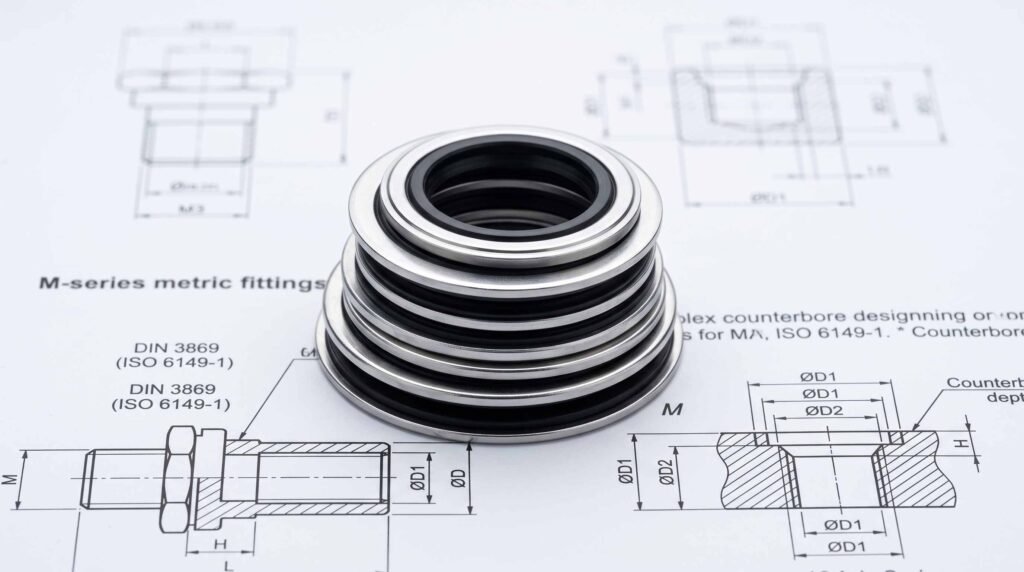
Metric Series: Compliant with DIN and ISO dimensional specifications, engineered for perfect integration with M-series metric thread fittings and counterbore designs.
| Technical Specification | Standard Parameters & Details |
|---|---|
| Elastomer Materials |
|
| Metal Ring Materials | Carbon Steel, Stainless Steel (304 / 316 / 316L), Aluminum, Brass |
| Surface Treatment (Metal) | Zinc Plated (Clear/Yellow/Olive Drab Cr3+), Zinc-Nickel, Phosphated, Passivated (for Stainless) |
| Operating Temperature Range |
|
| Max Operating Pressure | Up to 40 MPa (400 bar / 5800 psi) depending on seal size, material, and installation clearance. |
| Available Size Standards |
|
| Seal Profiles | Standard Bonded Seals, Self-Centering Bonded Seals (pre-assembled to prevent thread damage and ensure concentricity). |
| Applicable Media | Mineral oils, hydraulic fluids, water-oil emulsions, compressed air, and synthetic lubricants. |
Heavy Construction & Mining
High-pressure hydraulic seals engineered to withstand extreme shock loads, pressure spikes, and abrasive environments in heavy-duty earthmoving equipment.
Industrial Automation
Precision pneumatic sealing solutions designed for low-friction and high-speed repetitive operations in modern manufacturing assembly lines.
Agricultural Machinery
Robust fluid power profiles built to resist UV, harsh weathering, and constant exposure to abrasive particles in open-field environments.
Fluid & Pressure Control
Custom molded seals and heavy-duty O-rings formulated for reliable dynamic fluid control and leak prevention in critical valve systems.
Need a Custom Sealing Solution?
“Whether you need standard profiles or non-standard dimensions, our dedicated senior designer ensures rapid drawing output and precise prototyping. We provide seamless support from initial concept to full-scale production.”
 Direct Expert Review Skip the bureaucratic red tape. You will work directly with our dedicated senior designer to review your CAD drawings or reverse-engineer your physical samples, ensuring rapid and accurate technical communication.
- Material Optimization We don’t just copy dimensions; we optimize for performance. We help you select the exact elastomer or polymer (such as specialized FKM, NBR, or PTFE) to withstand your specific chemical fluids and thermal environments.
- Rapid CNC Prototyping Keep your downtime to an absolute minimum. Utilizing advanced CNC turning technology, we can manufacture high-precision custom prototypes quickly, without the need for expensive upfront mold tooling fees.
 Direct Expert Review Skip the bureaucratic red tape. You will work directly with our dedicated senior designer to review your CAD drawings or reverse-engineer your physical samples, ensuring rapid and accurate technical communication.
 Material Optimization We don’t just copy dimensions; we optimize for performance. We help you select the exact elastomer or polymer (such as specialized FKM, NBR, or PTFE) to withstand your specific chemical fluids and thermal environments.
 Rapid CNC Prototyping Keep your downtime to an absolute minimum. Utilizing advanced CNC turning technology, we can manufacture high-precision custom prototypes quickly, without the need for expensive upfront mold tooling fees.