

Securing the Final Defense Line of Industrial Equipment: Data-Driven Design of High-Performance Wear-Resistant Parts and Excellence in Handling Unexpected Crises
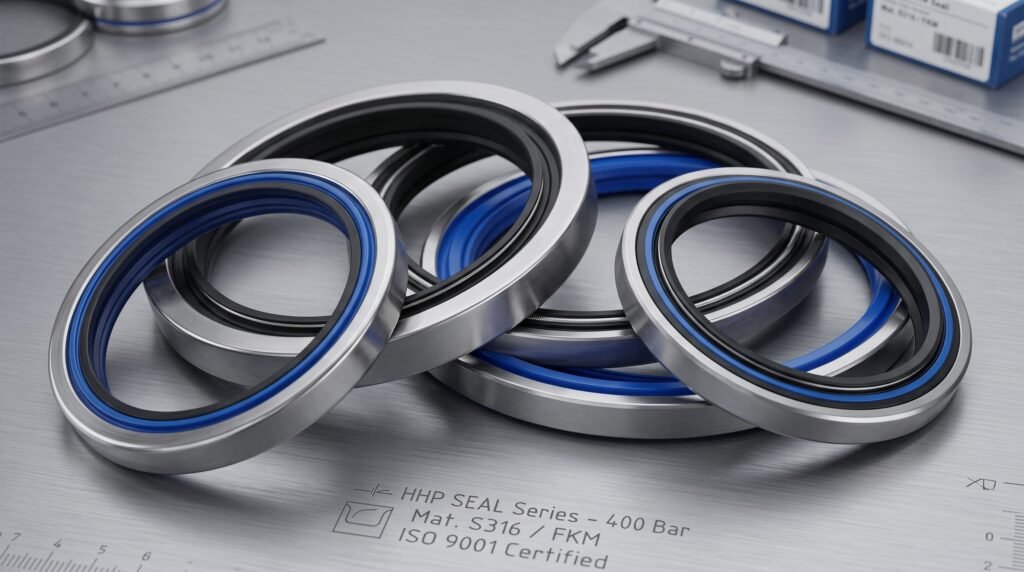
In modern industrial manufacturing and custom non-standard automation engineering, the efficient operation of a system often depends not only on the core drive units but also on those hidden yet critical “wear-resistant parts” (MRO components). As a professional designer deeply engaged in this field, I understand that components such as hydraulic and pneumatic seals, guide rings, wipers, rotary shaft seals, and various custom-machined PEEK and PTFE parts constitute the absolute final line of defense for industrial equipment.
The design of wear-resistant parts is not merely an intersection of materials science and mechanical engineering; it is a continuous, long-term battle against friction, pressure, extreme temperatures, and unpredictable working conditions. In this article, I will delve into the development standards of high-performance wear components, backed by detailed testing data and design logic. Furthermore, I will highlight how our team leverages professional expertise to deliver efficient and reliable breakthrough solutions for our international B2B clients when faced with extreme, unforeseen circumstances.
I. Data-Driven: The Core Material Selection Logic for Wear Parts
For exceptional wear-resistant part design, the first step is always precise material selection based on empirical data. In highly demanding industrial environments, relying on pure experience is a dangerous gamble; only hardcore physical and chemical data can provide reliable guarantees.
Polyurethane (PU) Elastomers: The Champion of Tear and Wear Resistance In the design of heavy-duty hydraulic cylinder wipers and piston rod seals, the mechanical strength of the material is paramount. The high-performance polyurethane materials we select typically maintain a stable tensile strength between 45 MPa and 55 MPa, with an elongation at break reaching 400% to 500%. Under the DIN 53516 abrasion test, the volume loss of premium PU is usually less than 20 mm³, making its wear resistance 3 to 5 times greater than that of traditional Nitrile Butadiene Rubber (NBR). This robust data performance ensures that in working conditions filled with heavy dust and micro-particles, the PU wiper can continuously maintain the sharpness of its lip, effectively scraping away external contaminants.
Modified Polytetrafluoroethylene (PTFE): Conquering Extreme Temperatures and Chemical Corrosion For applications requiring extremely low friction and high chemical resistance (such as spring-energized seals and wear bands), the natural creep tendency of pure PTFE is a significant design pain point. To counteract this, we modify the material by filling it with Bronze (typically 40%-60%), Carbon fiber, or Molybdenum Disulfide (MoS2). Testing data indicates that PTFE composite filled with 40% bronze increases its compressive strength by nearly 2 times compared to pure PTFE, and thermal conductivity improves by 3 times, while the friction coefficient remains at an exceptionally low 0.04 to 0.10. This enables our wear rings to operate continuously under extreme temperature differentials from -200°C to +260°C, preventing the dreaded “stick-slip” phenomenon even in unlubricated states.
Polyetheretherketone (PEEK): The Premier Engineering Plastic Alternative to Metal In certain non-standard automation valves or rotary shaft sleeves exposed to extreme pressure and temperature, we utilize PEEK as back-up rings or structural wear parts. PEEK features a high glass transition temperature of 143°C and a melting point of 343°C. Even at a scorching 250°C, it retains exceptionally high mechanical integrity (with a tensile strength of approximately 100 MPa). In the mating surface design of high-speed rotary shaft seals (such as cassette seals), PEEK’s dimensional stability and creep resistance make it the perfect lightweight alternative to traditional bronze or stainless steel wear sleeves.
II. Precision Structural Design: From Micro-Tolerances to Macro-Pressure Resistance
With top-tier materials in place, the rationality of the structural design dictates the ultimate lifespan of the wear parts. In hydraulic sealing systems, the Extrusion Gap is one of the primary culprits leading to premature seal failure.
Under high-pressure conditions reaching 400 bar (approximately 40 MPa), if the clearance of the metal groove is not strictly controlled, the rubber elastomer or polyurethane will be forced into the gap and sheared off. Our design standards dictate that at 400 bar, if the system’s radial clearance exceeds 0.2 mm, anti-extrusion backup rings must be introduced. Through Finite Element Analysis (FEA), we simulate the Von Mises stress distribution of the seal lip under varying pressure gradients. By shifting the maximum stress concentration point from the heel to the dynamic contact surface, we can elevate the pressure-bearing limit of the seal by 15% to 20%.
Furthermore, for rubber-to-metal bonded seals, we optimize the vulcanization process and adhesive formulations to ensure that the peel strength exceeds 12 N/mm. This strictly eliminates the risk of the elastomer delaminating from the metal skeleton under high-frequency vibration conditions.
III. Confronting the Unknown: Outstanding Problem-Solving Capabilities for Unexpected Situations
In industrial production, “unplanned downtime” is every factory’s worst nightmare. Every hour of stoppage can result in tens of thousands of dollars in economic losses. As professional wear-part designers and suppliers, our core competitiveness lies not only in providing stable daily inventory but, more importantly, in our rapid response and breakthrough capabilities when facing unexpected crises, abnormal wear, and emergency equipment failures.
Scenario 1: “Acclimatization” Issues and Media Mutation During the Pilot Run of Non-Standard Automation Equipment During a client’s pilot production run for a non-standard automated fluid control system, the client temporarily switched to a highly corrosive, high-temperature chemical cleaning fluid. The originally specified standard Fluorocarbon (FKM) O-rings exhibited severe swelling and hardening after just 72 hours of operation, leading to systemic leakage and threatening to halt the entire production timeline.
Our Solution: Within 2 hours of receiving the emergency feedback, our technical team retrieved and analyzed the MSDS (Material Safety Data Sheet) of the new chemical fluid. We decisively abandoned the conventional elastomer route and urgently reverse-engineered a spring-energized seal solution using a UPE (Ultra-High Molecular Weight Polyethylene) jacket combined with a stainless steel V-spring. Utilizing our flexible CNC turning production line, we completed the machining and dispatch of the non-standard sized seals within 24 hours. The newly designed seals achieved zero leakage in the subsequent 1,000-hour continuous high-pressure cyclic test, successfully rescuing the client’s delivery schedule.
Scenario 2: “Radial Side Load” and Abnormal Wear Under Extreme Working Conditions A heavy mining machinery client encountered a sudden breakdown at a harsh field site: the hydraulic cylinder piston rod frequently developed deep scratches, causing the primary seal to fail three consecutive times within a two-week span.
Our Solution: By conducting a microscopic morphological analysis (failure analysis) on the remnants of the damaged seals and combining it with field data, our engineers accurately determined that the root cause was not a quality defect in the primary seal. Instead, the equipment was generating a massive Radial Side Load far exceeding the initial design expectations while operating on extremely uneven terrain. The original phenolic fabric guide bands were crushed under this instantaneous impact force, allowing the piston rod to rub directly against the metal cylinder barrel. To combat this unexpected flaw, we urgently redesigned the support system, upgrading the single guide band to a dual-structure combination of widened glass-fiber reinforced POM guide rings and modified PTFE wear bands. This optimized design instantly elevated the radial load-bearing capacity from 40 N/mm² to an astonishing 120 N/mm². Following the modification, the hydraulic cylinders on this equipment did not experience a single instance of piston rod scoring or premature primary seal failure throughout its entire 18-month overhaul cycle.
IV. Conclusion: Being the Solid Backbone of Industrial Operations
Wear-resistant parts may be small, but they impact the entire mechanical ecosystem. We have always believed that an excellent wear-part designer should not merely be a drafter of blueprints, but a hybrid of a materials engineer, fluid dynamics analyst, and on-site troubleshooting expert.
By relying on rigorous data testing and forward-looking redundancy design, we ensure the absolute reliability of our standard products in the international B2B market. When faced with unpredictable emergencies, we leverage our profound technical accumulation, flexible custom machining capabilities (such as rapid prototyping of non-standard molds and instant response for CNC turned seals), and rich cross-industry troubleshooting experience to build the most solid line of defense for our clients at the very first moment.
In today’s industrial manufacturing landscape, where extreme efficiency is continuously pursued, choosing engineered reliability means securing an all-weather protection system capable of calmly navigating complex conditions and sudden operational crises.