

The Ultimate Engineer’s Guide to Mechanical Wear Parts & Industrial Seals
The Ultimate Engineer’s Guide to Mechanical Wear Parts & Industrial Seals
As a mechanical engineer, I’ve spent countless hours analyzing failed hydraulic cylinders, diagnosing seized rotary shafts, and tracing catastrophic equipment downtime back to a single, easily replaceable component that was ignored for too long. In the world of industrial manufacturing and heavy machinery, the battle against friction is relentless.
Whether you are managing a fleet of earthmoving excavators, maintaining a high-speed packaging line, or overseeing a custom non-standard automation facility, your equipment is only as reliable as its weakest link. More often than not, that weak link is a mechanical wear part—a seal, a guide ring, or a wiper that has succumbed to the harsh realities of heat, pressure, and contamination.
In this comprehensive guide, we are going to strip away the marketing jargon and look at mechanical wear parts through an engineering lens. We will explore the tribological mechanisms of wear, dissect the core MRO (Maintenance, Repair, and Operations) components that keep your machinery running, and provide a definitive material selection guide to help you upgrade your preventative maintenance protocols.
The Hidden Costs of Ignoring Wear Parts in Heavy Machinery
In plant management, we frequently discuss OEE (Overall Equipment Effectiveness) and MTBF (Mean Time Between Failures). However, procurement departments sometimes view wear parts—such as O-rings, cassette seals, and wear bands—as mere commodities. This is a costly miscalculation.
When a standard NBR (Nitrile Butadiene Rubber) seal hardens and fails prematurely due to thermal degradation, the cost is not the $5 replacement seal. The true cost is the $5,000 in lost hydraulic fluid, the $15,000 in scored cylinder rods, and the $50,000 in unrecoverable production downtime.
Proactive replacement of mechanical wear parts is the most ROI-positive activity a maintenance team can perform. By upgrading to high-performance polymers like PTFE (Polytetrafluoroethylene) or PEEK (Polyether Ether Ketone), engineers can drastically extend maintenance intervals, allowing facilities to shift from a reactive “break-fix” model to a predictable, preventative maintenance schedule.
Tribology 101: Understanding How Mechanical Wear Occurs
To select the right wear part, you must first understand the enemy. Tribology is the science of interacting surfaces in relative motion, encompassing friction, wear, and lubrication. In industrial environments, wear typically manifests in four primary mechanisms:
Abrasive Wear: This occurs when hard particles (like silica dust, metal shavings, or dirt) become trapped between two moving surfaces. The particles act like microscopic sandpaper, gouging the softer material (usually the seal or the guide ring) and eventually scoring the harder metal surface.
Adhesive Wear (Galling): When two metal surfaces make direct contact under high pressure without sufficient lubrication, localized micro-welding occurs. As the surfaces continue to move, these micro-welds tear apart, transferring material from one surface to the other and severely damaging the equipment.
Fatigue Wear: Repeated cyclic loading on a surface—such as the constant pressure fluctuations in a hydraulic cylinder—causes subsurface micro-cracks. Over time, these cracks propagate to the surface, resulting in spalling or pitting of the material.
Chemical and Corrosive Wear: In environments handling aggressive fluids, standard elastomers can swell, blister, or dissolve. This chemical degradation compromises the mechanical integrity of the wear part, leading to rapid failure under dynamic loads.
By understanding these mechanisms, we can engineer solutions. We use polyurethane wipers to defeat abrasive wear, PTFE guide rings to prevent adhesive wear, and FKM (Fluoroelastomer) to combat chemical degradation.
Deep Dive: Core MRO Components That Keep Your Lines Running
Let’s break down the critical components that act as the unsung heroes of your mechanical systems. Here at Yedra, we engineer and supply these specific components to meet the rigorous demands of European and global industrial standards.
1. Polyurethane Wipers and Scrapers: The First Line of Defense
Before we even discuss keeping fluid inside a system, we must discuss keeping contaminants outside. Polyurethane (PU) wipers, also known as scraper seals, are installed at the outermost boundary of a hydraulic or pneumatic cylinder. As the cylinder rod retracts, the wiper aggressively scrapes away mud, ice, metallic dust, and moisture.
Why Polyurethane? Standard rubbers often tear or degrade when subjected to the harsh, abrasive environments of construction or mining equipment. Polyurethane offers exceptional tensile strength, extreme abrasion resistance, and excellent tear strength. It is tough enough to dislodge hardened debris from a rod without scratching the metal surface.
When a wiper fails, abrasive particles bypass the defense line and enter the main hydraulic system. This leads to the rapid destruction of the primary rod seals and the internal guide rings. A high-quality PU wiper is the cheapest insurance policy you can buy for a $10,000 hydraulic cylinder.
2. PTFE Guide Rings and Wear Bands: The Friction Fighters
In hydraulic and pneumatic cylinders, the piston and the rod must remain perfectly centered within the cylinder bore. If the metal piston contacts the metal cylinder wall, catastrophic adhesive wear (scoring) will occur instantly.
Enter the guide ring (or wear band). These are non-metallic sacrificial bearings that absorb the transverse (side) loads and prevent metal-to-metal contact. While older systems used bronze or nylon, modern high-performance cylinders rely heavily on PTFE (Polytetrafluoroethylene) compounds.
PTFE is a marvel of polymer engineering. It possesses one of the lowest coefficients of friction of any known solid material, effectively eliminating the “stick-slip” phenomenon (juddering) that plagues low-speed, high-pressure cylinders. However, virgin PTFE is prone to cold flow (creep) under heavy loads. Therefore, industrial wear bands are typically alloyed—filled with materials like bronze, carbon, or glass fiber.
Bronze-filled PTFE: Offers high compressive strength, excellent thermal conductivity (dissipating heat away from the sliding surface), and extreme wear resistance. Ideal for heavy-duty hydraulic applications.
Carbon-filled PTFE: Provides excellent resistance to deformation under load and operates exceptionally well in water-based or poorly lubricated environments.
3. High-Performance PEEK Components: For Extreme Environments
When temperatures soar beyond 200°C (392°F) or when components are subjected to aggressive chemical solvents where even advanced fluoropolymers fail, engineers turn to PEEK (Polyether Ether Ketone).
PEEK is a semi-crystalline thermoplastic with astonishing mechanical properties. It retains its stiffness and strength at high temperatures, boasts excellent fatigue resistance, and is chemically inert to almost all organic and inorganic chemicals.
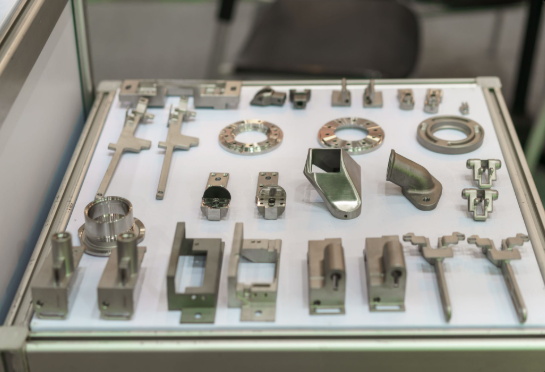
In non-standard automation design and custom machinery, we frequently specify machined PEEK components for valve seats, high-speed rotary shaft seals, and backup rings. While PEEK is more expensive than standard plastics, its ability to maintain dimensional stability under extreme stress makes it invaluable in aerospace, oil and gas, and advanced medical device manufacturing.
4. Hydraulic and Pneumatic Seals (Cassette Seals & O-Rings)
The core sealing elements are the unsung heroes of fluid power.
Cassette Seals: Used extensively in heavy-duty axles and agricultural machinery, cassette seals are fully enclosed, unitized sealing systems. They feature multiple sealing lips and a pre-lubricated internal running surface. This design protects the seal from external mud and water while preventing the sealing lip from grooving the expensive machine shaft.
O-Rings: The most ubiquitous seal in the world. While simple in design, selecting the right compound—whether standard NBR for general use, EPDM for steam and brake fluids, or FKM (Viton) for high temperatures and synthetic oils—is a critical engineering decision.
Material Selection Matrix: Choosing the Right Arsenal
Selecting the correct material for your wear parts requires a holistic evaluation of the operating environment: Temperature, Pressure, Speed, and Media (Fluid). Here is a quick reference matrix to guide your MRO procurement strategy:
| Material | Temp Range (°C) | Primary Strengths | Best Applications |
|---|---|---|---|
| NBR (Nitrile) | -30 to +100 | Good oil resistance, cost-effective, high tensile strength. | Standard hydraulics, pneumatics, general purpose O-rings. |
| FKM (Viton™) | -20 to +200 | Exceptional chemical resistance, high-temperature stability. | High-temp industrial environments, aviation, chemical processing. |
| Polyurethane (PU) | -35 to +90 | Unmatched abrasion resistance, extreme toughness. | Wiper seals, heavy-duty rod seals in earthmoving equipment. |
| PTFE (Teflon™) | -200 to +260 | Lowest friction, universal chemical compatibility, dry running. | Guide rings, rotary shaft seals, low-friction automation slides. |
| PEEK | -70 to +250 | High mechanical strength, rigid, extreme chemical resistance. | Backup rings, valve seats, high-load bearings in harsh environments. |
Recognizing the Symptoms of Impending Failure: An Engineer’s Checklist
You do not need to wait for a catastrophic blowout to know a seal or wear ring is failing. Machinery communicates its distress; you just need to know how to listen. Watch for these diagnostic indicators:
The “Stick-Slip” Phenomenon: If a hydraulic cylinder moves in a jerky, stuttering motion rather than a smooth stroke, your guide rings or seals are experiencing stick-slip. This indicates a loss of lubrication or that the seal material is gripping the rod too tightly. It is a precursor to severe adhesive wear.
Elevated Operating Temperatures: Place a thermal camera on your hydraulic cylinders or bearing housings. Localized hotspots indicate extreme friction, meaning a wear band has completely degraded, and you are likely experiencing metal-to-metal contact.
Micro-Leakage (Weeping): A thin film of oil on a cylinder rod is normal and necessary for lubrication. However, if that film turns into distinct drops that pool at the base of the gland, the primary rod seal is compromised.
Diesel Effect (Dieseling): If you inspect a removed polyurethane seal and see black, charred edges, it has experienced the diesel effect. This happens when air bubbles trapped in the hydraulic fluid are rapidly compressed, superheating the air and literally detonating the fluid against the seal face.
Audible Groaning or Squealing: In rotary applications, high-pitched squeals often indicate that the elastomer lip of a rotary shaft seal has run dry, hardened, and is now wearing a groove directly into the steel shaft.
Preventative Maintenance: Best Practices from the Field
To maximize the lifespan of your mechanical wear parts and custom automation equipment, implement these operational best practices:
Fluid Filtration is Non-Negotiable: Up to 70% of hydraulic seal failures are traced back to contaminated fluid. Implement stringent absolute filtration down to 3-5 microns. A cleaner system exponentially increases the life of PU wipers and PTFE wear bands.
Control the Heat: Heat degrades elastomers faster than friction. Ensure your heat exchangers are functioning correctly. If your system consistently runs above 90°C, transition from standard NBR to FKM (Viton) or PTFE components to prevent premature thermal hardening.
Invest in Proper Installation Tools: Countless high-performance seals are destroyed before the machine is even turned on because they were stretched over sharp threads or forced into a gland with a flathead screwdriver. Use proper seal installation cones, resizing tools, and ensure all metal entry chamfers are deburred and polished.
Partner with a Specialized Supplier: Stop buying generic, white-label seals for mission-critical machinery. Work with an engineering-focused B2B supplier who understands the chemical compatibility and dynamic loads of your specific application.
The Bottom Line
In industrial automation and heavy machinery, wear is inevitable, but catastrophic failure is optional. By understanding the tribological forces at play and upgrading your MRO inventory to include advanced polymers like bronze-filled PTFE, rugged Polyurethane, and high-strength PEEK, you transform maintenance from a painful expense into a strategic advantage.
At Yedra Industry, we specialize in engineering and supplying these critical mechanical wear parts, robust industrial seals, and custom non-standard automation components to manufacturing facilities worldwide. If you are experiencing repeated seal failures, or if you need to upgrade your current MRO supply chain with high-performance, precision-engineered solutions, it is time to evaluate your hardware. Equip your machinery with the components it deserves, and keep your production lines moving without interruption.